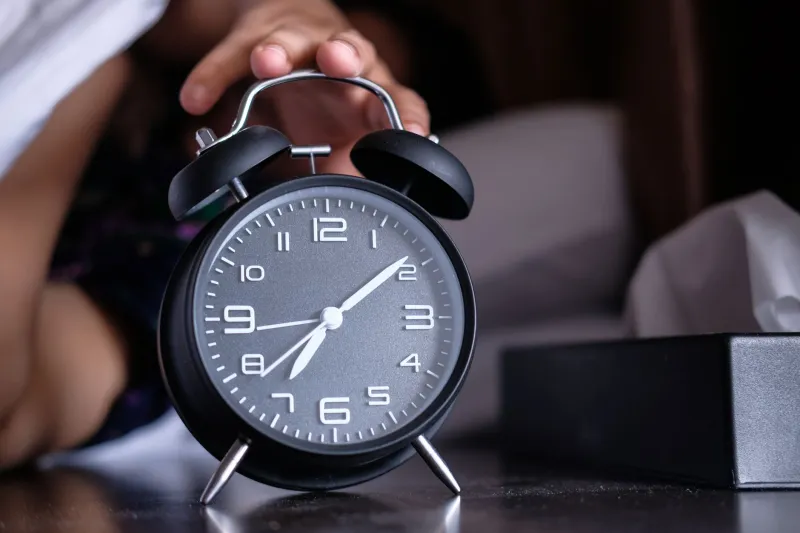
Why 9:30 AM Hits Different When Everyone Else Is Already in Meeting Hell

The Irony Nobody Talks About
Here's a scenario that probably sounds familiar: it's 9:28 AM, your brain is finally firing on all cylinders, a genuinely good idea is forming — and then your phone buzzes with a Slack notification, followed immediately by a calendar reminder for a "quick sync" that was definitely not on your radar yesterday. By the time you resurface from that vortex, it's 11:15 AM and whatever brilliant thing was brewing has completely evaporated.
Welcome to the 9:30 AM productivity paradox.
The very moment most people hit their cognitive stride is the exact same moment modern work culture throws the most noise at them. Back-to-back morning meetings, async threads that demand immediate responses, and the general chaos of a distributed workforce all converge right around that 9:30 window. And the people who figure out how to protect it? They tend to be the ones getting the most meaningful stuff done.
What's Actually Happening in Your Brain at 9:30
This isn't just a vibe — there's real science behind why mid-to-late morning is such a fertile zone for creative and analytical thinking. According to research in chronobiology (the study of how our biological rhythms affect behavior), most people experience a peak in alertness and executive function roughly 90 minutes to two hours after waking. For someone who rises around 7:30 AM, that sweet spot lands right around — you guessed it — 9:30.
Dr. Carolyn Anderson, a cognitive neuroscientist who has studied workplace performance patterns, puts it plainly: "Cortisol levels, which help regulate alertness, tend to peak in the late morning for most people. Combine that with a fully activated prefrontal cortex and you've got a brain that's primed for complex problem-solving and original thinking."
The catch? That window is narrow. And it's incredibly sensitive to interruption.
Remote Work Made It Worse (and Also Better)
Remote and hybrid work was supposed to give us more control over our schedules. And in theory, it did. But in practice, many workers — especially those in collaborative roles — found their calendars filling up faster than ever. Without the natural rhythm of an office environment, managers defaulted to meetings as a way to maintain connection. The result: more Zooms, more check-ins, more "let's hop on a quick call" moments crammed into the exact hours when deep work should be happening.
Jamila Torres, a UX designer based in Austin who went fully remote three years ago, describes it as a slow erosion. "At first I loved the flexibility. Then I noticed I was scheduling 9 AM standups and 10 AM reviews and suddenly my entire morning was gone. I wasn't designing anything — I was just talking about designing things."
She eventually implemented what she calls a "hard block" — a non-negotiable, calendar-visible hold on 9:15 to 10:30 AM every single day. "I labeled it 'Deep Work: Do Not Book.' Some people respected it immediately. Others tried to override it. But holding the line changed everything about the quality of my output."
The Meeting Culture Problem
It's worth naming the elephant in the room: American workplace culture has a meeting addiction. A 2023 survey from Atlassian found that the average employee attends 62 meetings per month and considers more than half of them unnecessary. And the bulk of those meetings? Scheduled in the morning, because that's when people feel most "present" and available.
Productivity consultant Marcus Webb, who works with mid-size tech companies on workflow redesign, has a term for this: "calendar colonization."
"When your calendar is open, people fill it," he says. "It's not malicious — it's just the path of least resistance. Protecting your peak hours requires being somewhat inconvenient, and most people aren't comfortable with that."
His advice is blunt: treat your 9:30 AM window the way you'd treat a client meeting. Block it, honor it, and stop apologizing for it.
Practical Ways to Defend the 9:30 Window
So what does that actually look like in practice? A few strategies that real people — not productivity influencers with perfectly staged home offices — are using right now:
Set your calendar to show as "busy" by default. Most calendar tools let you adjust your default availability. If your 9:30 AM block is automatically marked as occupied, people will route around it without you having to explain yourself every time.
Batch your meetings into the afternoon. This one takes negotiation, but it's worth it. Propose 1 PM or later as your default meeting window. Frame it as "I'm more present and engaged in the afternoon" — because honestly, you probably are for synchronous conversations.
Use a "no notifications before 10 AM" rule. Whether it's Slack, email, or your group chat, silencing everything until after your deep work window ends is a small boundary with an outsized impact. The world will not end. The thread will still be there.
Tell people — once. You don't need to justify your schedule constantly. A brief note in your Slack bio or email signature like "I'm heads-down 9–10:30 AM daily" sets expectations without requiring a recurring explanation.
What You Actually Do With the Time
Protecting the window is only half the equation. What you fill it with matters just as much.
The 9:30 AM hour isn't the time for email triage or administrative catch-up. That's work, but it's not your work — it's reactive, low-stakes, and it'll be there later. The 9:30 window is for the stuff that requires you at your sharpest: writing, strategizing, creating, problem-solving, or whatever version of deep thinking your job demands.
Jamila, the designer from Austin, puts it simply: "I ask myself every morning, 'What's the one thing that, if I finished it today, would make everything else feel easier?' That's what I work on at 9:30. Everything else is secondary."
The Bigger Picture
There's something almost countercultural about protecting your peak cognitive hours in an environment that treats availability as a virtue. Saying "I'm not free at 9:30" when everyone else is already deep in meeting madness can feel uncomfortable — even selfish.
But here's the reframe: doing your best thinking, producing your best work, and showing up fully for the things that actually matter? That's not selfish. That's sustainable.
The 9:30 AM paradox is real. The noise is real. But so is the window — and it's yours if you choose to claim it.
Now go block your calendar before someone else does it for you.