The Morning Brain Is a Terrible Thing to Waste: How I Learned to Guard 9:30 Like It's Sacred
The Window Is Real, and It's Closing Fast
Somewhere between waking up and the first Slack ping of the morning, something quietly extraordinary is happening inside your brain. Cortisol — yes, the stress hormone — actually spikes in a healthy, controlled way during the first hour or two after you wake up. Scientists call it the Cortisol Awakening Response, and what it does is fascinating: it primes your prefrontal cortex for high-level thinking, pattern recognition, and creative problem-solving.
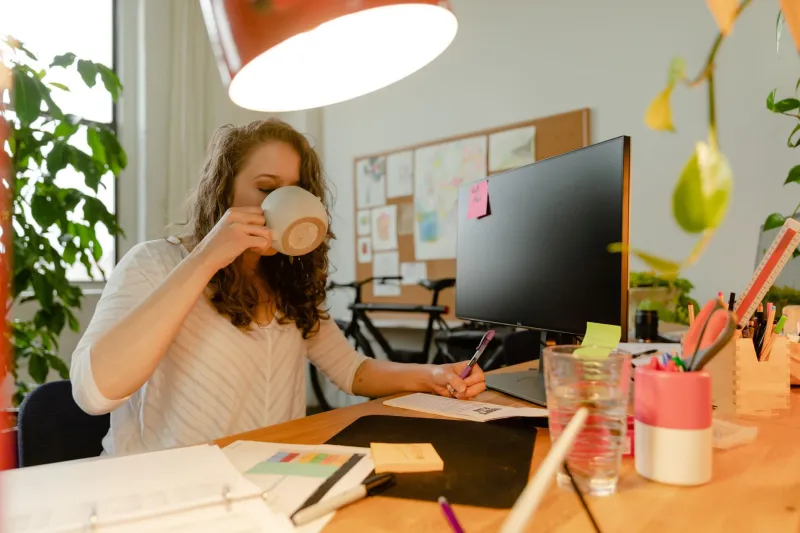
Translation? The version of you sitting with a coffee before 10 AM is genuinely smarter, more imaginative, and better at connecting ideas than the version of you who just got out of a 2 PM status meeting.
I didn't always know this. I used to treat mornings like a warm-up lap — answering emails, scrolling Instagram, half-watching whatever was on in the background. It wasn't until I started paying attention to when my best ideas actually showed up that I realized I'd been burning the most valuable real estate in my day on the mental equivalent of junk mail.
Now? I protect 9:30 AM like it's a meeting with someone I genuinely cannot afford to cancel on. Because it kind of is.
What the Neuroscience Actually Says
Beyond cortisol, there's something else going on in those early hours. When you first wake up, your brain lingers in a state researchers describe as hypnopompic — a semi-conscious phase where alpha and theta brain waves are still dominant. These are the same waves associated with daydreaming, free association, and the kind of loose, non-linear thinking that produces unexpected connections.
As the morning progresses and you shift into full wakefulness, your brain transitions into higher-frequency beta waves — great for focused tasks, not so great for the wandering, exploratory cognition that sparks original ideas.
The sweet spot, roughly between 9 and 10 AM for most people operating on a standard sleep schedule, is when both systems are briefly online at once. You're alert enough to capture and develop ideas, but still fluid enough to generate them in the first place.
That's the window. And here's the thing about windows: they close.
The Usual Suspects That Blow It
Let's be real about what kills this window, because it's not random. It's specific, it's predictable, and most of it lives on your phone or laptop.
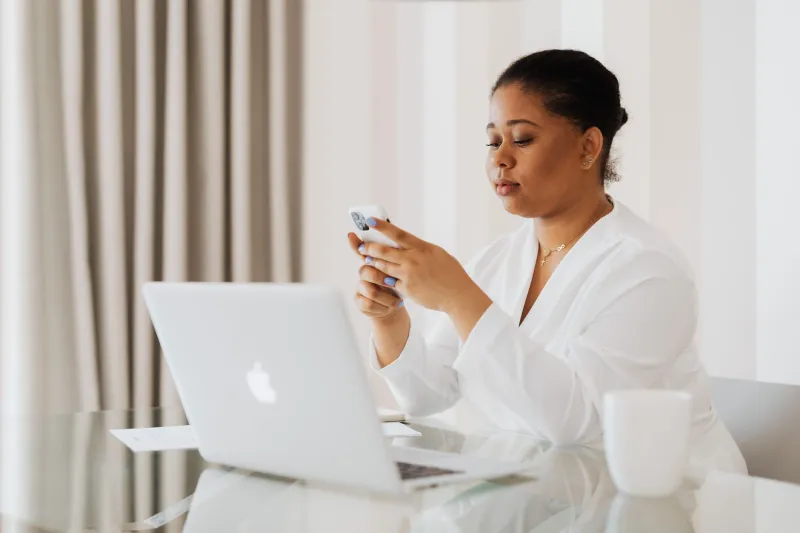
Slack and Teams notifications are probably the single biggest offenders for remote workers and content creators. The moment you see that little red badge, your brain shifts from generative mode into reactive mode. You're no longer creating — you're responding. And once you've context-switched, research from the University of California Irvine suggests it takes an average of 23 minutes to fully regain deep focus. Do that twice before 10 AM and the window is basically gone.
Email is sneakier because it feels productive. Opening your inbox first thing creates the illusion of momentum while actually anchoring your thinking to other people's agendas. Someone else's urgent request becomes your mental priority, and your own creative work gets bumped.
Meetings before 10 AM — I will die on this hill — are a form of institutional violence against good thinking. There are exceptions, obviously. But a recurring 9 AM check-in that could've been an async message is quietly one of the most expensive habits a team can have.
Social media deserves its own paragraph because the damage is subtler. It's not just the time — it's the comparison, the context-switching, and the dopamine micro-hits that make sustained, patient creative thinking feel boring by contrast. Your brain gets trained to expect constant stimulation, and then you wonder why sitting with a blank page feels so hard.
What I Actually Do to Protect It
I want to be specific here, because vague advice like "limit screen time" isn't useful. Here's what my actual 9:30 AM protection protocol looks like:
I don't check anything until 9 AM, minimum. My phone stays face-down and on Do Not Disturb until I've had at least 30 minutes of uninterrupted morning time. I use this window for journaling, brainstorming, or working on whatever creative project is currently on my plate. No exceptions unless something is genuinely on fire.
Slack gets scheduled check-ins, not open monitoring. I set specific times — usually 10:30 AM, 1 PM, and 4 PM — when I actually look at messages. Outside of those windows, notifications are off. I let my collaborators know this upfront, and honestly, most people respect it more than you'd think.
I use my calendar as a bodyguard. I block 8:30 to 10:00 AM every single weekday as "Deep Work" time. It's marked as busy. It shows up as unavailable. If someone tries to schedule a meeting in that slot, they get a polite redirect to afternoons. This sounds aggressive until you realize that nobody questions a 2 PM block — only morning ones, and only because we've been culturally conditioned to think mornings belong to everyone.
I keep a "brain dump" note on my nightstand. Any idea that floats up before I even get out of bed goes in there immediately, before the morning's logistics crowd it out. Some of my best pieces on this site started as a half-awake scribble at 7:15 AM.
I front-load creative work, back-load administrative tasks. Writing, ideating, planning content — that happens before noon. Responding to emails, invoicing, scheduling, editing — that's afternoon territory. It sounds simple, but restructuring your task list around your brain's actual rhythm rather than your inbox's demands is genuinely transformative.
A Note for the People Who Think They're Not Morning People
I hear this a lot, and I want to gently push back. Some people are genuinely night owls with a delayed circadian rhythm — that's real, and their peak creative window just shifts later. But a surprising number of people who identify as "not morning people" are actually just people whose mornings have always been chaotic, reactive, and screen-heavy. They've never actually experienced a calm, intentional morning, so they assume they don't work in them.
If that resonates, try one week of protecting just 45 minutes before 10 AM. No phone, no email, no news. Just you and whatever you're trying to make or think through. See what happens.
The Bottom Line
Your brain is doing something remarkable every morning before 10 AM. It's handing you the best version of its creative capacity, essentially for free. The only question is whether you're going to use it — or let a notification from someone who could've sent a Loom video steal it instead.
The 9:30 window isn't a productivity hack. It's biology. Protect it accordingly.