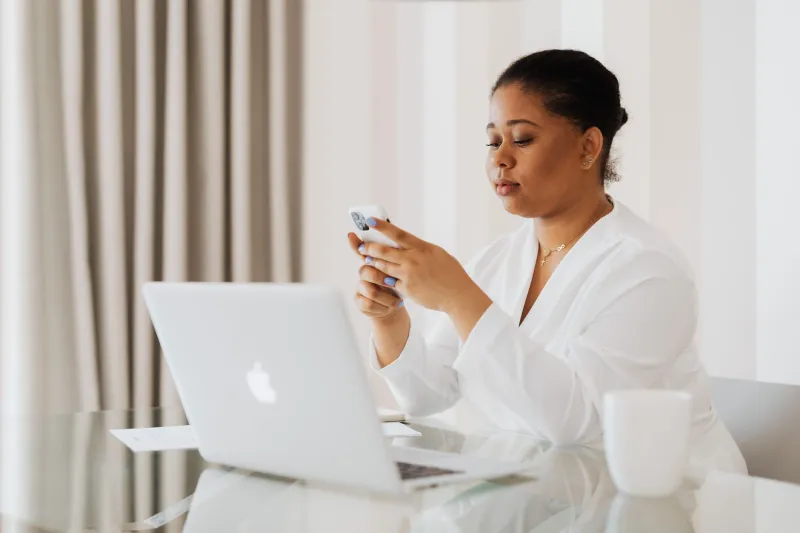
Your Phone Is Eating Your Best Hours Alive — Here's How to Fight Back
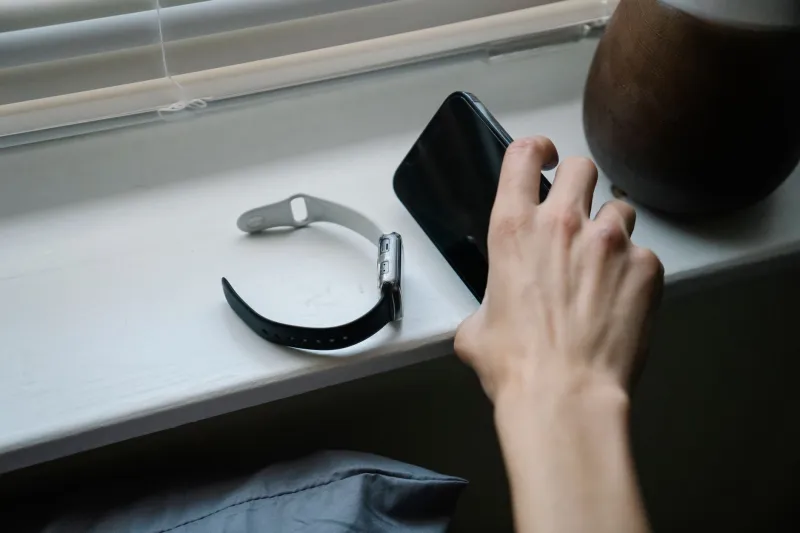
Let's be honest for a second. You carve out that golden 9:30 AM window. You've got your coffee, your notebook, maybe a good playlist humming in the background. You're ready. And then — ping. A Slack message from a coworker asking if you "have a sec." A calendar notification for a meeting that somehow got scheduled right in the middle of your flow state. A text from your mom. A breaking news alert that has absolutely nothing to do with your life but somehow demands your eyeballs anyway.
And just like that? The window closes.
This isn't bad luck. It's by design. And if you're serious about protecting your 9:30, you need to understand what you're actually up against — and why defending that time takes more than just wanting to focus.
The Interruption Economy Is Real (And It's Targeting You)
Here's something worth sitting with: the average knowledge worker gets interrupted every 11 minutes, and it takes roughly 23 minutes to fully return to a task after a significant distraction. Do that math. If you're getting three or four meaningful interruptions between 9 and 10 AM, you're not getting deep work done. You're just feeling like you're working.
This isn't an accident. Apps, platforms, and workplace tools are literally engineered to pull your attention. The red badge on your email app, the little "so-and-so is typing" bubble in Slack, the pop-up notification on your phone — these are all tiny dopamine triggers. Your brain is wired to respond to them because they signal social information, and social information used to matter for survival. Your nervous system doesn't know the difference between a saber-toothed tiger and a Slack message marked urgent.
The result? Your best creative hours get sliced up into fragments too small to be useful.
Why 9:30 Is Especially Vulnerable
Morning focus — that mental clarity window most people hit somewhere between 9 and 11 AM — is precious precisely because it doesn't last long. Your prefrontal cortex is firing on all cylinders. Your decision fatigue is still low. You haven't burned through your cognitive reserves on a hundred small choices yet.
But that same sharpness that makes 9:30 AM so powerful also makes it more sensitive to disruption. When your brain is in deep focus mode, an interruption doesn't just pause the work — it collapses the whole mental architecture you were building. You were holding context, ideas, threads of thought. An interruption scatters all of it.
This is why protecting 9:30 isn't just a nice productivity hack. It's genuinely the difference between doing your best thinking and doing a mediocre version of it.
The Biggest Culprits (Ranked by Sneakiness)
Not all distractions are created equal. Some are obvious. Others are sneaky enough that you don't even clock them as interruptions.
1. Slack and workplace messaging apps. The worst offender, because they come wrapped in the language of collaboration. "Quick question" is never quick. And the expectation of near-instant response has turned these tools into anxiety machines.
2. Meeting culture. Someone scheduling a 9:15 AM check-in is essentially nuking your entire morning focus window before it even starts. The anticipation of an upcoming meeting fragments your attention even before the meeting begins.
3. Email. A little more asynchronous than Slack, but still dangerous if you open it first thing. You'll spend 20 minutes responding to things that didn't need same-day responses and wonder where your morning went.
4. Your own phone. Personal texts, social media, news apps — these feel like your distractions, which makes them harder to resist. But they're just as destructive.
5. Open-office energy. If you work in a shared space — home or office — ambient interruptions from people around you can pull you out of focus without a single notification firing.
Building Your 'Do Not Disturb' Policy
Okay, so what do you actually do about it? Here's what works — not in theory, but in practice.
Set a hard DND window and communicate it. Tell your team, your roommates, your family: 9 to 10:30 AM is heads-down time. You're not being rude. You're being intentional. Most people will respect it once you name it out loud instead of just hoping they'll figure it out.
Use your tools against themselves. Every major platform has a Do Not Disturb or Focus Mode feature. Use them aggressively. On iPhone, set a Focus mode that only allows calls from specific people. On Slack, set your status to something clear — "Deep work until 10:30, back shortly" — and mute notifications. On your laptop, turn off all badge notifications during your block.
Don't open email or Slack before your focus window ends. This one's hard, but it's probably the highest-leverage change you can make. The moment you open either of those, you've invited the outside world's agenda into your head. Do your 9:30 work first. Check messages after.
Batch your meetings. If you have any say in your schedule, push meetings to the afternoon. Protect mornings like they're a non-negotiable appointment with yourself — because they are.
Create a physical signal if you're in a shared space. Headphones on, door closed, a sticky note on your monitor — whatever signals to the people around you that you're in a focus block. It sounds low-tech, but it works.
The Mindset Shift That Makes It Stick
Here's the thing nobody talks about enough: protecting your 9:30 isn't just a systems problem. It's a permission problem.
A lot of us feel vaguely guilty about not being immediately available. We've been conditioned to treat responsiveness as a virtue — like answering a Slack message within two minutes is proof that we're good at our jobs. But being perpetually interruptible isn't the same as being effective. It's actually the opposite.
Giving yourself permission to be unreachable for 60 to 90 minutes isn't selfish. It's the thing that makes the rest of your day better — for you and for everyone around you. You'll do sharper work, make better decisions, and honestly, you'll be less fried by 2 PM.
Your 9:30 is only as powerful as the boundaries you build around it. The notifications will always be there. The Slack messages will survive being answered an hour later. But that window of peak focus? It doesn't wait.
Guard it like it matters — because it does.