Morning Autonomy Went Mainstream — And Now It's a Flex
Somewhere along the way, protecting your morning hours stopped being a personal productivity strategy and started being a personality trait. A status signal. Proof that you've made it.
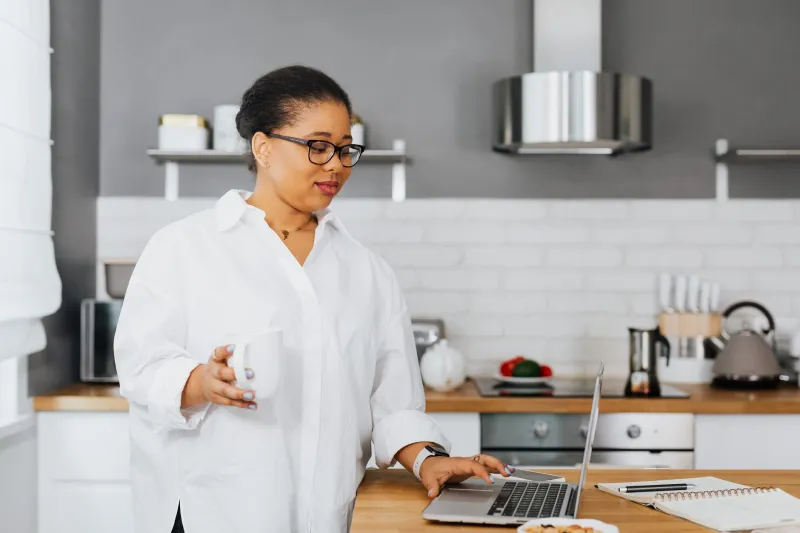
Scroll through any professional's social media on a Tuesday at 9:30 AM and you'll find a very specific kind of content: the artful latte photo, the "deep work session" caption, the serene home office with natural light pouring in. The unspoken message underneath all of it is the same: I don't have anywhere I have to be right now. Isn't that something?
And look — I say this as someone who literally built a brand around 9:30 AM. I am aware of the irony. But that's exactly why I think it's worth talking about.
From Early Bird to Flex Hours: The Cultural Shift
For most of American professional history, the morning narrative was pretty simple: get up early, get to work, beat the competition. The 5 AM wake-up was the ultimate signal of ambition. Hustle culture worshipped the early riser. "The early bird gets the worm" wasn't just a saying — it was practically a moral framework.
Then something shifted. Remote work, the gig economy, the rise of entrepreneurship as a mainstream aspiration — all of it started loosening the grip of the 9-to-5 structure. And as that structure loosened, the ability to not be somewhere at 9 AM became its own kind of currency.
Career strategist Dana Holloway, who works with executives and entrepreneurs in the Bay Area, has watched this shift play out in real time with her clients. "Ten years ago, the flex was working 80 hours a week," she told me. "Now the flex is working when you want. The signal has completely inverted. Busyness used to mean success. Now autonomy means success."
And nowhere is that autonomy more visible — or more performed — than in the morning.
The 9:30 AM as Social Currency
Here's what's interesting about morning autonomy as a status symbol: it's not just about the hours themselves. It's about what those hours represent.
When someone posts their calm, intentional 9:30 AM, they're not really posting about productivity. They're posting about freedom. About having built something — a career, a business, a professional reputation — that doesn't require them to punch a clock. In a country where so much of our identity is tied to what we do and how hard we work, the ability to slow down in the morning has become the ultimate proof of arrival.
"It's a form of conspicuous leisure," says cultural commentator and writer Priya Nair, who studies how work culture intersects with identity in the US. "We used to signal status through consumption — the car, the house, the watch. Now we signal it through time. Specifically, through the ability to opt out of the systems that most people are still trapped in."
There's something genuinely appealing about that shift, honestly. Opting out of performative busyness is, in many ways, a healthier aspiration than the 80-hour grind. But it comes with its own complications.
Who Actually Gets to Own Their Morning
Let's be real about something: the morning autonomy conversation happens almost exclusively among people who have enough professional leverage to have it.
The nurse starting a 7 AM shift. The teacher in her classroom by 7:45. The warehouse worker clocking in before most people have had their first cup of coffee. The single parent who has already navigated three kids' morning routines before 8 AM and is now commuting to a job that absolutely does not care about their peak cognitive window.
For a huge portion of working Americans, the 9:30 AM conversation is simply not accessible. And when we talk about protecting morning hours as though it's a universal opportunity, we're doing something a little dishonest — or at least incomplete.
Dana Holloway put it directly: "The clients I work with who have the most control over their mornings also have the most control over everything else. That's not a coincidence. Morning autonomy is downstream of professional power. And professional power is not equally distributed."
This doesn't mean the conversation isn't worth having. But it does mean we should have it with some awareness of who's in the room — and who isn't.
The Performance Problem
There's another layer to this that I find genuinely worth sitting with: what happens when protecting your morning stops being about what's actually good for you and starts being about what looks good to others?
Because I've noticed — in myself and in the broader content landscape — a tendency to perform morning intentionality rather than actually practice it. The aesthetic of the slow morning can become its own kind of distraction. You spend so much time curating the ritual that you forget to actually use the time.
Priya Nair called it "the Instagram morning trap" — the phenomenon where the documentation of a productive morning replaces the productivity itself. "There's a whole genre of content that's basically just people performing calm," she said. "And calm that's performed for an audience isn't really calm. It's a different kind of hustle with better lighting."
Ouch. But also: fair.
What I Actually Think
Here's where I land on all of this, for what it's worth.
I think protecting your peak hours — whatever time those happen to be — is genuinely valuable. I think the cultural shift away from performative busyness is mostly a good thing. And I think there's something real and meaningful about building a life where you have some agency over how your days begin.
But I also think we're at risk of turning a personal practice into a social performance, and a class-specific privilege into a universal ideal. Both of those things make the underlying goal — actually living and working better — harder to achieve, not easier.
The 9:30 AM isn't a status symbol. Or it shouldn't be, anyway. It should just be an hour. One that belongs to you, that you use well, that makes the rest of the day feel a little more like yours.
Whether you're posting about it or not.
Especially if you're not.